
2025/12/08
Practical Guide to Air Compressor Fault Warning and Maintenance
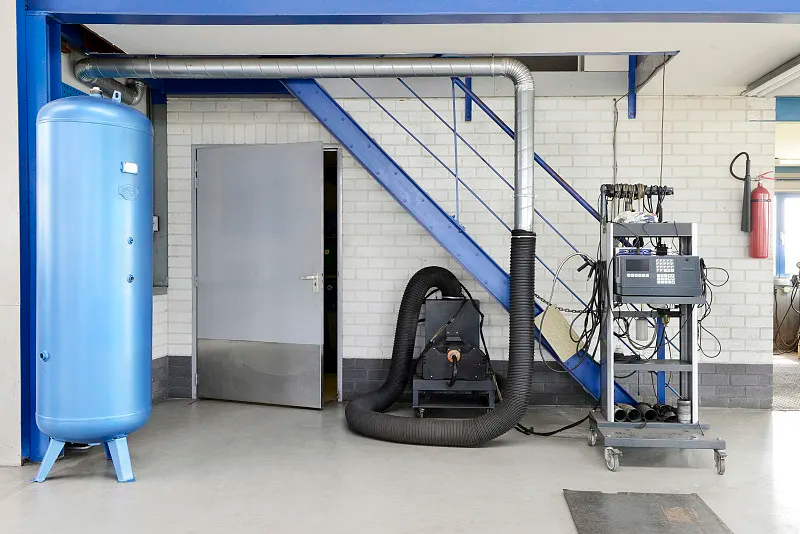
As the "power core" of industrial production, the stable operation of air compressors is directly related to production efficiency and operating costs. However, during longterm use, issues such as equipment aging, improper maintenance, and incorrect selection of accessories may lead to breakdowns and shutdowns, causing unnecessary losses to enterprises. This article summarizes common failure types of air compressors, core early warning signals, practical troubleshooting techniques, and professional maintenance suggestions to help enterprises accurately avoid risks, extend equipment service life, and ensure production continuity.
I. Common Failure Types of Air Compressors: Avoid Core Risks in Advance
Most failures of air compressors stem from technical wear and tear, lack of maintenance, or accessory problems, mainly focusing on the following categories:
Internal component wear failures: With the increase in service life, parts such as pistons, bearings, and seals inside the compressor will naturally wear. If not replaced in time, it may easily lead to performance degradation or even shutdown.
Failures caused by lack of maintenance: Neglecting basic maintenance such as filter replacement and lubricating oil replenishment will result in the accumulation of impurities, increased friction of components, and serious damage to the core structure of the equipment.
Mismatch failures with nonoriginal accessories: Using nonoriginal accessories that do not meet quality standards may accelerate equipment wear and directly induce failures due to issues such as mismatched sizes and poor material quality.
Control system and sensor failures: Malfunctions of the control system or sensors will cause disorder in equipment operating parameters, making it unable to respond normally to work requirements.
Air leakage failures: Loose pipe joints, aging seals, damaged components, and other reasons can cause compressed air leakage, which not only wastes energy but also increases the operating load of the equipment.
II. 6 Major Fault Early Warning Signals: Detect and Solve Early
Before equipment failures occur, there are often obvious early warning signals. Timely capture of these signals can effectively prevent the expansion of failures:
Abnormal operating noise: Harsh noises, vibration noises, or irregular noises during equipment operation may be caused by loose parts, severe wear, or motor imbalance.
Failure to start: If the equipment has no response after power is turned on, it is likely related to motor failures, power supply abnormalities, or main engine head failures, requiring precise investigation of the root cause.
Oil circuit system problems: Lubricating oil leakage, abnormal oil level, oil deterioration, etc., will lead to insufficient lubrication of components, causing serious friction damage and requiring immediate handling.
Excessive vibration amplitude: Significantly increased vibration during equipment operation may be due to misalignment of internal components, loose fixing bolts, or unbalanced rotors, requiring timely adjustment.
Continuous pressure drop: The inability of compressed air pressure to maintain the set standard is mostly related to damage to the intake valve, pressure valve, piston seal, or air storage tank check valve, requiring replacement of faulty components.
Excessive equipment heating: Abnormally high body temperature may be caused by blocked heat dissipation air ducts, cooling system failures, or excessive dust accumulation on components, requiring timely investigation of heat dissipation issues.
III. Practical Troubleshooting Techniques: Quickly Solve Common Problems
After discovering fault signals, taking targeted inspection and repair measures can minimize shutdown losses:
Overheating inspection: Check if the heat dissipation air duct is unobstructed, clean the dust on the body and internal components; inspect the operation status of the cooling system (such as cooling fans, radiators); ensure the equipment is placed in a wellventilated environment to avoid heat accumulation in enclosed spaces.
Abnormal noise handling: Check the equipment's fixing bolts and component connection points one by one, tighten loose parts; replace severely worn bearings, gears, and other components; perform balance calibration on the motor to reduce operational vibration.
Fuse blowout repair: If the equipment frequently blows fuses, it is necessary to check if the circuit wiring is aging or shortcircuited; detect if the power supply voltage is stable; check if the motor is overloaded.
Startup failure inspection: First, confirm whether the power supply lines and switches are normal; then check core components such as the motor windings and capacitors; if it is a main engine head failure, professional personnel are required for disassembly and maintenance.
Air leakage location and repair: Use soapy water or professional leak detection spray, apply it to easily leaking parts such as pipe joints, valves, and seals; the bubbling place is the leak point; repair by tightening connections, replacing damaged seals, or aging pipes.
IV. Longterm Preventive Maintenance Plan: Extend Equipment Service Life
It is better to prevent than to repair afterward. Scientific preventive maintenance can significantly reduce the incidence of failures:
Regular comprehensive inspections: Formulate periodic inspection plans, focus on checking core components such as motors, main engine heads, pipes, valves, and seals, record operating parameters, and identify potential hidden dangers in advance.
Standardized replacement of filter elements: Replace air filters, oil filters, etc., regularly according to operating conditions to prevent impurities from entering the equipment, ensure the cleanliness of intake air, and prevent component wear and overheating.
Adhere to using original accessories: When replacing parts, be sure to use original genuine products to ensure precise matching of accessories with the equipment, and avoid equipment damage caused by substandard quality of nonoriginal accessories.
Do a good job in oil circuit maintenance: Regularly check the lubricating oil level and oil condition, timely replenish or replace the appropriate type of lubricating oil according to equipment requirements to ensure sufficient lubrication of components.
Regular maintenance by professional teams: Entrust professional technical teams to formulate customized maintenance plans, conduct regular indepth maintenance, and detect hidden equipment problems with professional tools to ensure the professionalism and comprehensiveness of maintenance.
The stable operation of an air compressor relies on the sensitive detection of fault signals, efficient troubleshooting, and routine maintenance. Companies need to establish a comprehensive equipment management system and implement preventive maintenance effectively in order to minimize the risk of faults, reduce downtime losses, and ensure the equipment continuously performs at its best. For professional guidance on troubleshooting or customized maintenance plans, companies can contact specialized service providers to safeguard their production operations.


