
2025/12/22
Compressed Air Recovery and Utilization Technology:Turning Factory Waste Gas into Energy,the Secret of30%Annual Emission Reduction
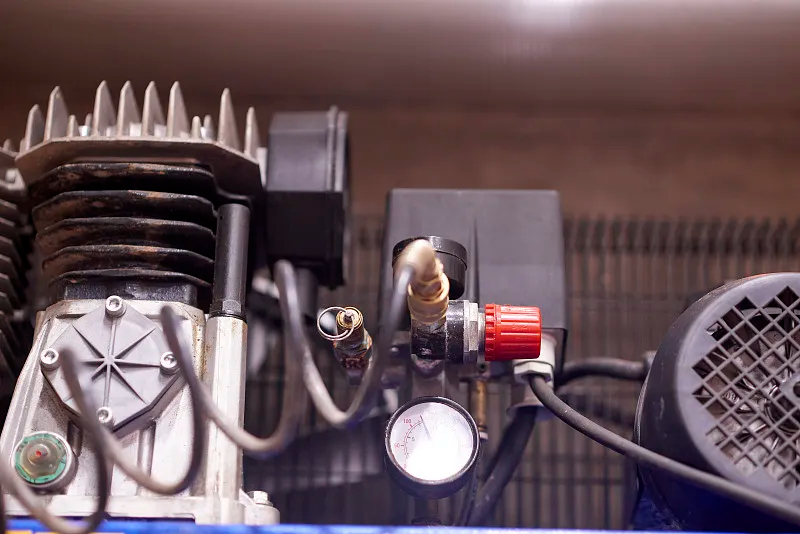
In industrial production, compressed air is known as the "blood of industry", but its production process consumes a great deal of electrical energy. Statistics show that the power consumption of air compressors accounts for 10%-30% of the total power consumption of factories. More notably, most factories have serious waste of compressed air: leakage loss accounts for 20%-30%, and direct emission of equipment exhaust and process residual gas accounts for 15%-20%. These wasted "waste gases" actually contain recoverable energy and resources. Today, compressed air recovery and utilization technology has become a core grasp for factories to reduce costs and emissions, realizing the transformation of "turning waste gas into energy". Some applied enterprises have even achieved an amazing result of 30% annual emission reduction. This article will analyze the core logic, application scenarios and landing value of this technology to help enterprises tap energy-saving potential.
I. First, Understand: What Exactly Is Wasted in the "Waste" of Compressed Air?
The compressed air directly emitted in factories is not "useless gas", but contains two core recoverable resources. Wasting it means double losses:
Pressure Energy: The core value of compressed air lies in pressure, and direct emission will lead to complete loss of pressure energy. For example, the 0.7-1.0MPa compressed air commonly used in factories contains pressure energy equivalent to 0.1-0.15kWh of electrical energy per cubic meter. If 1000 cubic meters are emitted daily, the annual wasted electrical energy can reach 36,000-54,000 kWh.
Thermal Energy: In the process of compressing air by air compressors, about 75%-85% of electrical energy is converted into thermal energy, raising the exhaust temperature to 80-120℃. Direct emission of this high-temperature exhaust not only wastes thermal energy, but also increases the heat dissipation load of the workshop, indirectly increasing air conditioning energy consumption.
In addition, costs have been invested in the production, drying and transportation of compressed air (such as dehydration by dryers and impurity removal by filters). Direct emission is equivalent to wasting the previous purification costs. The compressed air recovery and utilization technology achieves "turning waste into treasure" by accurately capturing these two types of resources.
II. Core Technical Paths: 3 Recycling Modes Adapting to Different Factory Scenarios
Compressed air recovery and utilization is not a "one-size-fits-all" solution. Instead, it is divided into three core technical paths according to the factory's air consumption conditions and waste types, to tap energy-saving potential in a targeted manner:
1. Pressure Energy Recovery: Direct Conversion to Mechanical/Electrical Energy for Circulation Utilization
Applicable Scenarios: Exhaust gas from pneumatic equipment, process residual gas (such as mold opening exhaust of injection molding machines, return stroke exhaust of pneumatic punching machines), pipeline leakage recovery, etc. Such gases still retain a pressure of 0.3-0.8MPa.
Core Principle: Convert the pressure energy of compressed air into mechanical energy or electrical energy through "pressure energy recovery devices" (such as pneumatic motors, air turbine generators). For example:
Small-Scale Scenarios: Install small pneumatic motors at the exhaust ports of pneumatic tools to drive low-power equipment such as conveyor belts and fans, realizing a cycle of "exhaust gas from air-consuming equipment supplies energy to another equipment";
Large-Scale Scenarios: Install air turbine generators at the end of the factory's main compressed air pipeline or centralized exhaust points to convert the centrally recovered high-pressure waste gas into electrical energy, which is integrated into the factory's internal power grid to directly offset part of the power consumption of air compressors.
Data Reference: In the stamping workshop of an auto parts factory, 800 cubic meters of 0.6MPa pneumatic equipment exhaust gas is generated daily. By installing an air turbine generator, 42,000 kWh of electrical energy is recovered annually, which is equivalent to reducing standard coal consumption by 13.4 tons and CO₂ emissions by 35.8 tons.
2. Thermal Energy Recovery: Capturing Compression Heat to Replace Industrial Heat
Applicable Scenarios: Recovery of exhaust thermal energy from all types of air compressors, especially suitable for screw compressors and centrifugal compressors operating continuously for 24 hours. Such equipment has stable compression heat output and the highest recovery value.
Core Principle: Capture the thermal energy in the exhaust gas of air compressors through "thermal energy recovery heat exchangers" (such as water-cooled and air-cooled types) to heat cold water or air, replacing the factory's original heat sources (such as electric heaters, steam boilers). Common application directions include:
Domestic Heat Use: Heating bathing water and heating water in employee dormitories and workshops, with a temperature of 50-60℃, fully meeting daily needs;
Production Heat Use: Providing hot water/hot air for processes such as industrial cleaning, material drying, and preheating of chemical reaction kettles. For example, the water temperature requirement for raw material cleaning in food factories is 40-50℃, which can be directly met by the recovered compression heat;
Auxiliary Energy Saving: Heating the cold air inhaled by air compressors to increase the intake air temperature, which can improve the efficiency of air compressors by 3%-5% and further reduce power consumption.
Data Reference: For 2 units of 160kW screw air compressors in a chemical enterprise, by installing a thermal energy recovery system, the daily recovered thermal energy can heat 12 tons of 55℃ hot water, completely replacing the original 15kW electric heater, saving 129,600 kWh of electricity annually and reducing CO₂ emissions by 107 tons.
3. Purification and Recycling: Circulation Reuse After Treatment to Reduce New Gas Production
Applicable Scenarios: Scenarios with high cleanliness of process exhaust gas (such as precision processing exhaust gas in electronic factories, sterile production exhaust gas in pharmaceutical factories). Such gases can be reused after simple re-purification.
Core Principle: Through a "multi-stage filtration + drying" re-purification system, remove a small amount of impurities and moisture in the recovered air to meet the production air standard, and then transport it back to the air compressor intake port or directly supply it to air-consuming equipment through pipelines, reducing the output of new compressed air.
Key Advantages: It not only saves the gas production energy consumption of air compressors, but also reduces the consumption of consumables (such as adsorbents and filter elements) in dryers and filters, lowering the whole-life cycle cost. For example, in the chip packaging workshop of an electronic factory, through the purification and recycling system, the clean exhaust gas is recycled, the output of new gas is reduced by 22%, and the annual electricity cost is saved by 86,000 yuan.
III. Landing Value: More Than 30% Emission Reduction, These Benefits Are Even More Amazing
The value of compressed air recovery and utilization technology is far more than the environmental benefit of "30% annual emission reduction". It can also bring multiple direct and indirect benefits to enterprises, with an investment payback period of generally 1-3 years:
1. Direct Benefits: Significantly Reduce Energy Consumption Costs
This is the core benefit. Pressure energy recovery can be directly converted into electrical/mechanical energy to replace part of the power grid electricity; thermal energy recovery can replace electric heating and steam boilers to reduce fossil energy or electrical energy consumption; purification and recycling can reduce the gas production load of air compressors and directly reduce the power consumption of air compressors. Overall, after the technology is implemented, the total energy consumption of the factory's compressed air system can be reduced by 15%-35%, and large factories can save hundreds of thousands of yuan in electricity costs annually.
2. Environmental Benefits: Easily Achieve Emission Reduction Targets and Avoid Policy Risks
Under the current "dual carbon" policy, enterprises are facing increasing pressure to reduce emissions. By reducing electrical energy consumption (indirectly reducing thermal power carbon emissions) and replacing fossil energy (directly reducing carbon emissions), compressed air recovery and utilization can rapidly improve enterprises' emission reduction effectiveness. For example, every 10,000 kWh of electrical energy recovered can reduce CO₂ emissions by 8.6 tons; if a factory recovers 400,000 kWh of electrical energy annually, it can reduce CO₂ emissions by 344 tons, easily completing the annual emission reduction target and also participating in carbon trading to obtain additional benefits.
3. Indirect Benefits: Extend Equipment Service Life and Reduce Operation and Maintenance Costs
The thermal energy recovery system can reduce the exhaust temperature of air compressors, reduce the thermal loss of internal equipment components, extend the service life of wearing parts such as bearings and seals, and reduce the maintenance frequency; purification and recycling can reduce the amount of dust inhaled by the air compressor intake port during new gas production, reducing main engine wear; at the same time, recovery and utilization reduce the leakage of compressed air, lower the pressure load of pipelines and valves, and reduce the labor and material costs of leakage repair.
IV. Which Factories Are Most Suitable for Landing? 3 Types of Scenarios for Priority Layout
Not all factories are suitable for immediately implementing compressed air recovery and utilization technology. The following 3 types of scenarios have the highest investment return ratio and are recommended for priority layout:
High-Energy-Consumption Factories: Factories where the power consumption of air compressors accounts for more than 20% of the total power consumption (such as manufacturing, chemical industry, auto parts factories). There is a lot of wasted compressed air energy, and the recovery benefits are more significant;
Continuous Operation Scenarios: Factories where air compressors operate continuously for 24 hours (such as semiconductor factories, food processing factories). The output of compression heat and pressure energy is stable, and the recovery system can operate continuously and efficiently, avoiding efficiency loss caused by frequent start and stop;
Air-Intensive Scenarios: Factories with a large number of pneumatic equipment and large exhaust gas volume (such as stamping factories, injection molding factories, assembly workshops). There is sufficient raw material for pressure energy recovery, which can quickly form economies of scale.
V. Huitong Xinda: Customized Compressed Air Recovery and Utilization Solutions to Help Enterprises Reduce Costs and Emissions
The core of the implementation of compressed air recovery and utilization technology lies in "accurate matching of working conditions" — different factories have different requirements for air pressure, exhaust volume and cleanliness, so it is necessary to design targeted recovery paths to avoid "blind investment". Huitong Xinda has been deeply engaged in compressed air system solutions for many years and has a professional technical team that can provide enterprises with full-process customized services:
Preliminary Diagnosis: Detect the waste points, emission volume, pressure/temperature parameters of the factory's compressed air through professional equipment, and accurately calculate the recovery potential and benefits;
Scheme Design: According to the diagnosis results, customize a combined scheme of "pressure energy recovery + thermal energy recovery + purification and recycling", and match the appropriate recovery equipment and pipeline transformation scheme;
Landing Implementation: Be responsible for equipment installation, commissioning and personnel training to ensure the seamless connection between the recovery system and the original compressed air system for rapid commissioning;
Post-Operation and Maintenance: Provide regular inspection and equipment maintenance services, real-time monitor the recovery efficiency, and optimize the scheme according to changes in working conditions to ensure long-term stable benefits.
At present, Huitong Xinda has customized compressed air recovery and utilization solutions for more than 200 manufacturing enterprises, helping customers achieve an average reduction of 25% in energy consumption of compressed air systems, 20%-35% in annual emission reduction, and the shortest investment payback period is only 11 months.
Conclusion: Compressed Air Recovery Is Not Only "Cost Saving" but Also "Revenue Increasing"
With the rising energy costs and increasing environmental pressure, compressed air recovery and utilization technology is no longer a "icing on the cake", but a "must-choice" for enterprises to reduce costs and increase efficiency and realize green development. Those neglected "waste gases" are actually the "hidden energy reservoirs" of factories. Through scientific recovery and utilization, enterprises can not only significantly reduce energy consumption costs, but also easily achieve emission reduction targets, realizing a win-win situation of economic and environmental benefits.
If your factory has the problem of compressed air waste and wants to understand its own recovery potential and customized solutions, welcome to contact Huitong Xinda. We will provide you with free working condition diagnosis services to help enterprises tap energy-saving potential and start the cost reduction and emission reduction path of "turning waste gas into energy"!


