
2025/12/29
A detailed analysis of air compressor pressure units: What are the differences between PSI, PSIA, and PSIG?
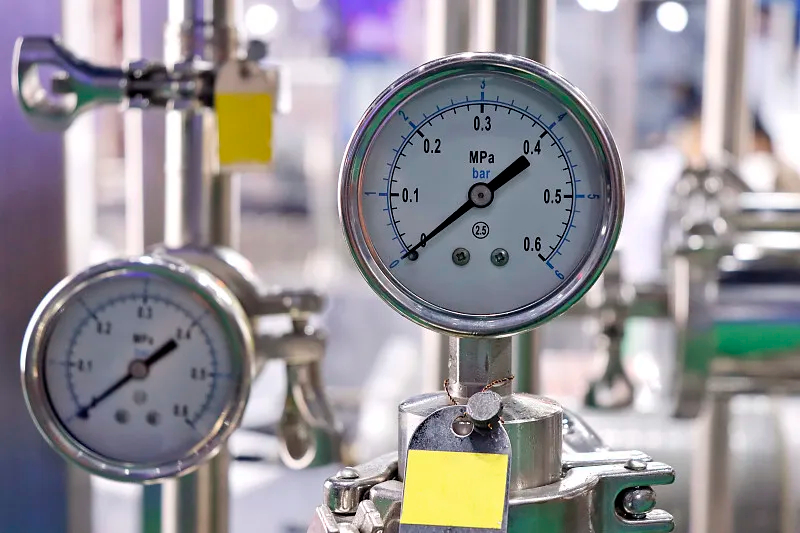
When selecting, operating, or maintaining an air compressor, you must often encounter three pressure units: PSI, PSIA, and PSIG. Many users confuse their meanings, leading to selection errors such as mistaking PSIG for PSIA resulting in insufficient pressure and equipment alarms. This article will explain the definitions and differences of these three core pressure units in plain language, supplement practical operation guidelines combined with actual air compressor application scenarios, help you fully understand pressure units, and avoid pitfalls due to cognitive deviations.
I. First, Clarify the Basics: What is PSI?
PSI stands for Pounds per Square Inch, which refers to the pound-force exerted per square inch. It is a commonly used pressure measurement standard in the imperial unit system corresponding to metric units such as MPa and bar.
In the air compressor field, PSI is the most basic pressure expression unit. For example, we often say the rated pressure of a certain air compressor is 100 PSI. However, it should be noted that PSI alone does not specify the pressure reference standard. In practical applications, it is necessary to judge whether it is absolute pressure or gauge pressure according to the scenario — this is precisely the significance of PSIA and PSIG.
Supplementary conversion: Common industrial pressure unit conversion relationships for cross-unit scenario use: 1 PSI is approximately equal to 0.06895 bar and approximately equal to 0.006895 MPa; 1 MPa is approximately equal to 145.038 PSI; 1 bar is equal to 14.5038 PSI.
II. Core Difference: PSIA vs PSIG, a World of Difference with One Word
Both PSIA and PSIG are pressure units based on PSI. The core difference lies in different pressure reference standards — simply put, one includes atmospheric pressure and the other does not. This is also the key point most easily confused in industrial scenarios.
1. PSIA: Absolute Pressure
PSIA stands for Pounds per Square Inch Absolute, and its pressure reference standard is absolute vacuum which is a state of 0 pressure. Calculation formula: PSIA = Atmospheric Pressure + Gauge Pressure.
Popular understanding: PSIA measures the total pressure including the atmospheric pressure of the air itself. At standard atmospheric pressure at sea level, the atmospheric pressure is approximately 14.7 PSIA. This means that even if the equipment pressure gauge shows 0, the actual absolute pressure is still 14.7 PSIA.
Air compressor application scenarios: Mostly used in professional scenarios such as equipment design and performance testing, such as the exhaust absolute pressure of the air compressor main unit and the calculation of the compressor's compression ratio. The compression ratio equals exhaust absolute pressure divided by intake absolute pressure. Attention should be paid to selection in high-altitude areas. Atmospheric pressure decreases at high altitudes. For example, atmospheric pressure at 1000 meters above sea level is approximately 13.8 PSIA. If selecting equipment according to the PSIG value in plain areas, it may lead to insufficient actual air supply pressure.
2. PSIG: Gauge Pressure
PSIG stands for Pounds per Square Inch Gauge, and its pressure reference standard is local atmospheric pressure. It is also the most commonly used pressure unit in daily operation of air compressors. Calculation formula: PSIG = Absolute Pressure - Atmospheric Pressure.
Popular understanding: PSIG measures the part exceeding atmospheric pressure and is also the value directly displayed by the air compressor pressure gauge. For example, if the pressure gauge shows 80 PSIG, it means the pressure inside the equipment is 80 PSI higher than the external atmospheric pressure. If the pressure gauge shows 0 PSIG, it means the pressure inside the equipment is equal to the external atmospheric pressure, not absolute vacuum.
Air compressor application scenarios: Daily operation and selection such as the air supply pressure required by workshop pneumatic equipment such as 90 PSIG and the setting of the air compressor's rated working pressure such as 125 PSIG. Pressure adjustment and maintenance such as adjusting the start-stop pressure of the air compressor pressure switch and checking whether the pipeline pressure meets production needs all refer to PSIG.
A Table to Distinguish the Relationships Between the Three
Pressure Unit | Core Definition | Reference Standard | Air Compressor Application Scenarios | Conversion at Standard Sea Level Conditions |
PSI | Pounds per square inch, basic pressure unit | Not specified need to be combined with scenarios | General pressure expression, needs supplementary explanation of reference standard | 1 PSI is approximately equal to 0.06895 bar |
PSIA | Absolute pressure | Absolute vacuum 0 pressure | Equipment design, compression ratio calculation, high-altitude selection | 1 PSIA = 1 PSIG + 14.7 PSIA |
PSIG | Gauge pressure | Local atmospheric pressure | Daily operation, pressure setting, production air supply needs | 1 PSIG = 1 PSIA - 14.7 PSIA |
III. Practical Pitfall Avoidance: 3 Key Notes in Air Compressor Scenarios
After understanding the differences between the three, pay attention to the following 3 points during air compressor selection, operation and maintenance to avoid equipment failures or production losses caused by unit confusion:
Clarify pressure units during selection: When purchasing an air compressor, you need to clearly inform the supplier whether the production requires gauge pressure or absolute pressure. For example, if the pneumatic component is marked with working pressure 90 PSIG, mistakenly selecting an air compressor with a rated pressure of 90 PSIA will result in an actual air supply pressure of only 75.3 PSIG. The calculation method is 90 minus 14.7, which cannot meet production needs.
Correct pressure values in high-altitude areas: In high-altitude areas such as plateau factories, the atmospheric pressure is lower than 14.7 PSIA. If the air compressor pressure is set according to the PSIG value in plain areas, the actual absolute pressure will be low. For example, at an altitude of 2000 meters, the atmospheric pressure is approximately 12.7 PSIA. If 80 PSIG gauge pressure is needed, the actual absolute pressure is 92.7 PSIA, and it is necessary to confirm whether the air compressor can reach this absolute pressure.
Gauge reading is not equal to absolute pressure: When checking the air compressor pressure daily, the value displayed by the pressure gauge is PSIG which is gauge pressure, not PSIA. If it is necessary to calculate professional parameters such as the compression ratio, the gauge pressure needs to be converted to absolute pressure. The conversion method is to add the local atmospheric pressure.
Conclusion: Distinguish Units for More Efficient and Safe Operation of Air Compressors
Although PSI, PSIA, and PSIG differ by only one word, their meanings and application scenarios are completely different. For air compressor users, focusing on PSIG which is gauge pressure is sufficient for daily operations. However, in equipment selection, high-altitude applications, or professional parameter calculations, it is necessary to clearly distinguish between absolute pressure and gauge pressure.
If you have questions about air compressor pressure setting, selection, or high-altitude applications, the professional technical team of Huitong Xinda can provide one-on-one consulting services, and provide accurate pressure matching solutions combined with your production scenario to ensure efficient and safe operation of the equipment. Welcome to contact us at any time!


